Your body constantly sends signals about its internal state, and urine color is one of the most frequently checked indicators. While pale yellow urine is often associated with adequate hydration and darker yellow urine may occur when urine is more concentrated, it is not a perfect diagnostic tool.
What Urine Color Can Tell You About Hydration
When you are well-hydrated, your kidneys excrete excess water, diluting the urochrome (the pigment that colors urine) and resulting in a lighter color. Conversely, when water intake is low, the kidneys conserve water, concentrating the urochrome and making the urine appear darker. However, timing, diet, and individual physiology mean this is just one piece of the puzzle.
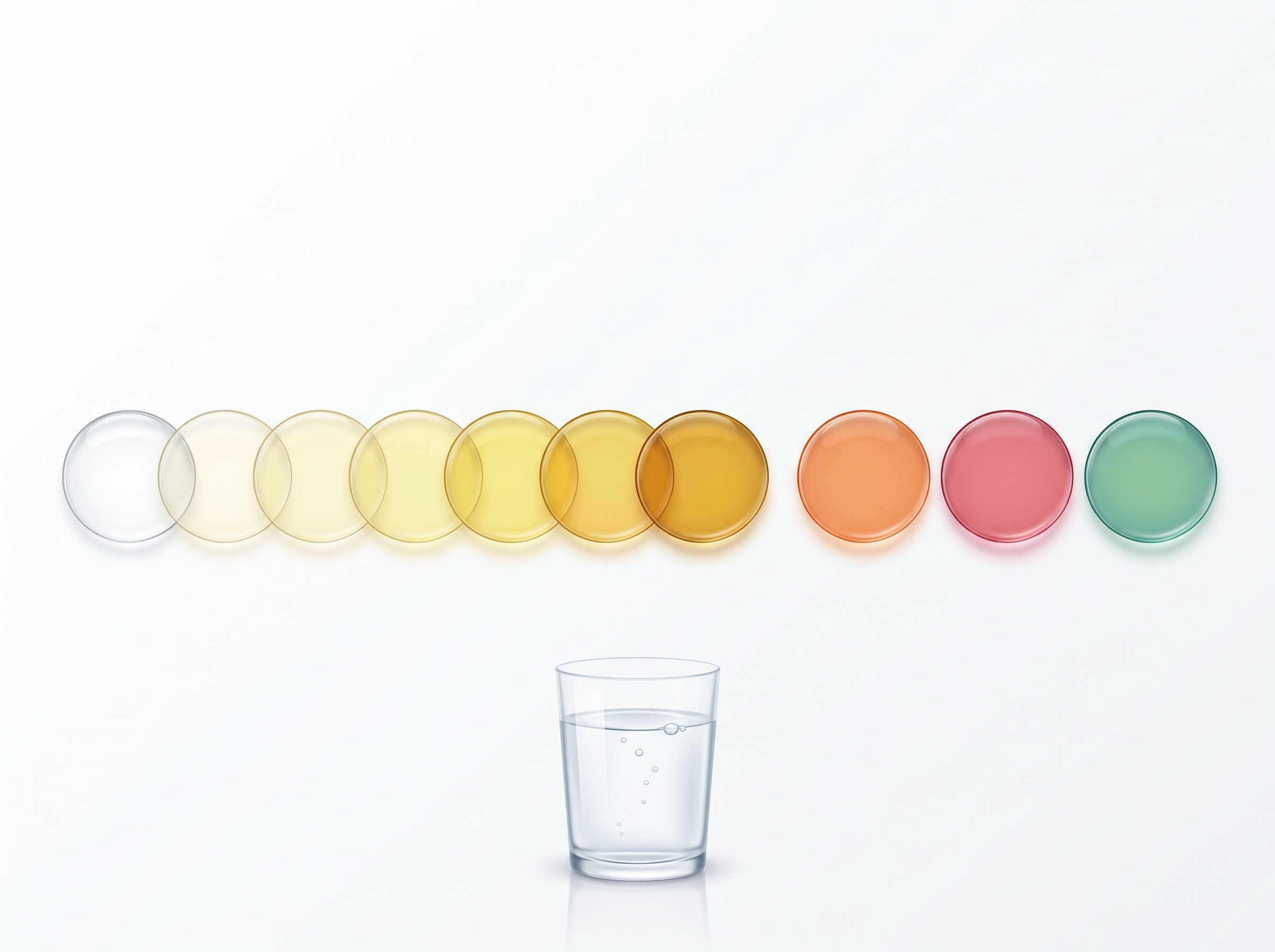
The Educational Urine Color Chart
Clear / Colorless
Possible Hydration: May indicate overhydration (drinking more water than needed).
Other Causes: Diuretics or certain medical conditions.
Pale Yellow / Straw
Possible Hydration: Generally considered a sign of optimal, healthy hydration.
Yellow
Possible Hydration: Normal, but suggests you could drink a glass of water soon.
Dark Yellow / Amber
Possible Hydration: Often associated with mild to moderate dehydration. Your body is conserving water.
Other Causes: High B-vitamin intake.
Orange or Brown
Possible Hydration: Can indicate severe dehydration.
Other Causes: Food dyes, laxatives, liver or bile duct conditions. Medical advice may be appropriate if persistent.
Unusual Colors
Sometimes urine takes on unexpected shades that have little to do with your water intake:
Dehydration Signs & Symptoms
Learn the systemic signs of dehydration beyond urine color.
How Much Water Should You Drink?
Find out your baseline hydration needs.
Why Urine Color Isn't a Perfect Diagnostic
Relying solely on visual checks is flawed. Certain supplements (like Riboflavin) turn urine bright yellow even if you are perfectly hydrated. Some medications alter color, and specific foods exert strong pigment effects. Furthermore, urine color reflects hydration status with a delay—it tells you what your kidneys were doing hours ago, not necessarily what your body needs at this exact moment.
When Urine Color Should Not Be Ignored
If you experience persistently dark, brown, or red urine, especially when accompanied by pain, fever, or fatigue, you should consult a healthcare professional. Do not assume it is merely dehydration.
A Better Way: Build Consistent Hydration Habits
Rather than relying on a single, delayed biological sign, the best approach to wellness is building a consistent hydration routine. Tracking your intake proactively ensures your body has what it needs before signs of dehydration appear.
HydraLife currently does not use urine color as an input, diagnostic signal, or hydration target adjustment. Instead, HydraLife helps you track your daily hydration goals consistently, providing personalized targets based on activity and weather, and engaging you with a virtual companion.
Sources & References
Dehydration Signs & Symptoms
Learn the systemic signs of dehydration beyond urine color.
How Much Water Should You Drink?
Find out your baseline hydration needs.