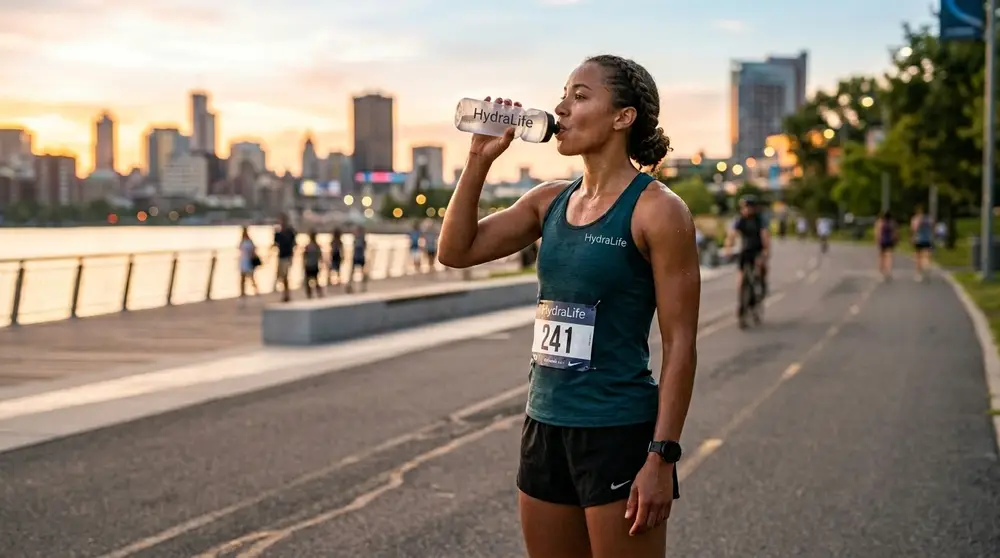
Water requirements scale up significantly when you exercise. However, a vast majority of amateur athletes underestimate their fluid losses, leading to early fatigue, cramps, and increased risks of injury.
Why Physical Effort Changes Everything
- Thermoregulation & Sweating: To keep your core temperature stable, your body cools down by sweating. Replacing this lost water and essential electrolytes is critical.
- Impact on Performance: Even a minor 2% drop in body weight from dehydration can cut physical stamina and focus by 20%.
- Muscular Recovery: Poor hydration delays muscle regeneration and causes post-workout cramps.
Best Hydration Practices for Workouts
Adopt these simple adjustments to boost your fitness performance:
- Pre-Workout: Drink water steadily in the hours leading up to your session to start fully hydrated.
- During Exercise: For sessions exceeding 30 minutes, take small sips every 15 minutes instead of waiting until you feel thirsty (see our list of early dehydration signs).
- Post-Workout: Rehydrate steadily over the following hours to restore water levels and assist recovery.
An easy mistake is keeping a static hydration target on both rest days and workout days. A 60 oz target might be perfect for sedentary desk days, but falls short on active days (read our article on evaluating your daily water needs).
Conclusion
Adapting your hydration to match your physical energy expenditure is key to staying fit. To automate this task, HydraLife connects to Apple Health and pulls active energy data, dynamically adjusting your target based on daily workouts and local weather.